


AFIG :a $200 million regional fund focused on 28 countries on near the African Coast of the Atlantic Ocean.
Posted On Saturday, July 14, 2007 at at Saturday, July 14, 2007 by Unknown
AFIG is currently raising the Atlantic Coast Regional Fund (“ACRF”, the “Fund”), a $100 to $200 million regional fund focused on 28 countries on or near the African Coast of the Atlantic Ocean from Morocco to Angola (the “Region”). The Fund will target strong growth companies operating in West and Central Africa, preferably with a regional scope. ACRF will consider investments in all sectors, with particular focus on industrial firms, financial institutions and companies investing in infrastructure and other related sectors. Target companies will be mature and cash-flow generative companies operating in sectors with high entry barriers and/or enjoying market dominance. In addition, target companies will exhibit a proven track record in terms of managerial competence, satisfactory and measurable performance and a solid business plan. ACRF expects to generate a net Internal Rate of Return of 20% - 25% in US$ terms, resulting in returns in excess of two times invested capital. Geographic Focus The Region targeted by ACRF is defined as follows: * Western Africa encompassing the 15 Economic Community of West African States (“ECOWAS”) countries, plus Mauritania and Morocco * Central Africa encompassing the 6 CEMAC countries, plus the Democratic Republic of Congo, Rwanda, Burundi, Uganda and Angola.

This is the richest man in Africa
Posted On Tuesday, June 19, 2007 at at Tuesday, June 19, 2007 by UnknownOn the ninth floor of the Dangote Group headquarters in Lagos, Nigeria's most successful businessman has a panoramic view of the sprawling urban mass, which makes up Nigeria's commercial capital.
His visitor, Mr Otedola has made a fortune from trading fuel and petroleum products in Nigeria, but Mr Dangote is in another league. His business empire spans the economy. He dominates the markets for sugar, cement, rice, pasta, textiles and salt, and he is big in transport, oil and gas.
"I think I have to be rated by Forbes magazine first before I can be [called] the richest man in Africa," says Mr Dangote modestly. "But, you know, I'm comfortable."
New investments
Mr Dangote has come along way from his early days of trading commodities in his home town of Kano in the north.
We have had a generational change in business and this is now going to happen in government
Aliko Dangote, Dangote Group
He recently turned 50 and has listed two of his 13 companies on the Nigerian stock market. His stake in those two alone is worth more than $4bn (£2bn).
In politics, as in business, he is also a powerful player. He is not ashamed to be financially supporting President Olusegun Obasanjo's ruling People's Democratic Party and he is confident that its candidate Umaru Musa Yar'Adua will become Nigeria's next president.
"I am close to people in government because I am one of the big businessmen in Nigeria," he explains. "If we don't have the right people there then [all the] money I have is useless. If the country turns into another Zimbabwe, for example, then I will become a poor person."
For now, Mr Dangote is confident about the future and he lists some of the $9bn of investments in Nigeria he is currently planning, including the world's biggest sugar refinery, a 300,000 barrels a day oil refinery and a massive 5,000 megawatt power project.
How to protect yourself from Nigerian Counterfeit Check Fraud : Overpayment Fraud)
Posted On Friday, June 01, 2007 at at Friday, June 01, 2007 by UnknownHere's how it starts
You want to sell your old car, or Aunt Tillie's bureau, or those terrific dogs you breed? Just run an ad in any one of the online classifieds and you can reach an audience of thousands.
One of those thousands is a swindler who has been patiently watching his screen all morning, just waiting for you - and several hundred other people - to post an ad.
He or she will contact you by email or phone and offer to buy what you're selling, usually no questions asked, sight unseen. What a deal! Your item will be picked up on behalf of the so-called buyer by someone local. As for the payment, you'll be sent a check that's way over the amount you're asking. Please just go ahead and deposit the check and send the buyer the difference.
Where do these checks come from?
In the beginning, most of the checks arrived by mail with a return address of "Maryland, LAGOS." That is to say, they came from Nigeria but a quick glance would lead you to believe it arrived from the State of Maryland in the U.S.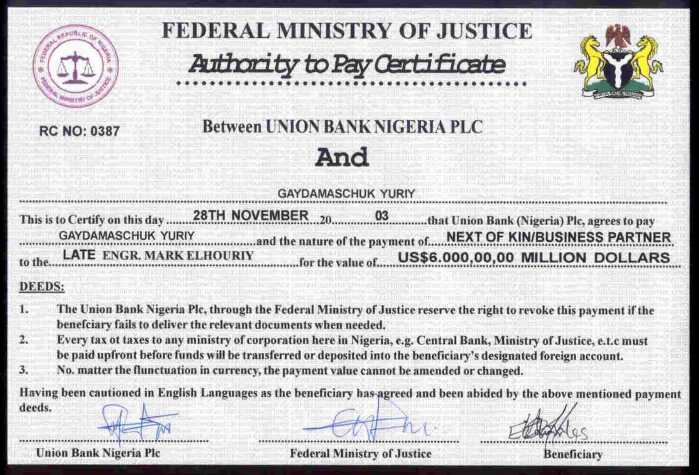
The check forging rings are so widespread that members can be found just about anywhere. They stay in place on long enough to ensure the forged checks arrive at their destination. Most communication from the phony buyer is received via email, cell phone, and satellite phone.
Who says you can't cheat an honest man?
Most Nigerian scams rely on a certain amount of greed on the part of the target and a willingness to overlook the legal aspects of the proposal, such as ferreting illegally acquired funds out of Nigeria or other countries.
The Counterfeit Check scam, on the other hand, is based on the total honesty of the swindler's target which is you, the seller.
Following the buyer's request, you deposit the check into your account. If you have received a Cashier's Check or have an excellent credit record with your bank, the check will be credited to your account without delay. If the funds were wired directly to your account from another bank, then there is no question that the money is readily available.
You then immediately arrange for the excess funds to be wired to the bank account number the buyer has supplied to you for that purpose, or to forward the funds through Western Union. Your bank sends the funds out either that day or the following morning, or you run down to the nearest Western Union office to wire the funds to London or Italy or wherever.
Shortly thereafter you receive a call from the bank and the roof falls in on you.
Fact is, NO legitimate business transaction asks you to wire excess funds anywhere. It's simply not done for the basic reason that no legitimate business person is about to trust an absolute stranger with their money.
Who ends up paying the price?
In most instances, you are going to have to pay for the loss. That means you will have to make up for the amount that you wired - plus any of the money you spent. In rare instances, the bank will absorb the loss, but don't count on it.
The reason for this is that when you endorse a check, you are vouching for the validity of that check.
But what about Cashier's Checks? Or funds wired directly into your account? In those instances the liability is determined on a case by case basis. Some banks are on the alert for the scam, others are not. Nonetheless, the final responsibility lies with the depositor.
You see, the only responsibility a financial institution has toward its customers is to keep each person's funds accounted for and safe from harm. Those are the basics. Beyond that, there are Federal regulations, state regulations, and internal regulations. Laws are different for Credit Unions, Commercial Banks, and brokerage houses. Each is accountable to a different oversight organization.
Kiva.org : person-to-person microcredit Web site for entrepreneurs in developing countries.
Posted On Wednesday, May 30, 2007 at at Wednesday, May 30, 2007 by Unknown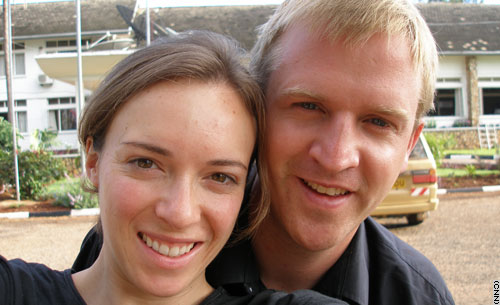
Matt and Jessica Flannery founded Kiva.org, a person-to-person microcredit Web site. Kiva -- which means "unity" in Swahili -- allows individuals to make loans as small as $25 to entrepreneurs in developing countries. Since Kiva.org was launched more than two years ago, it has brokered more than $6.5 million in collateral-free loans to more than 9,000 businesses.
LINK: www.Kiva.orgjavascript:void(0)
Save Now
Richest people in the world.
Posted On Saturday, May 19, 2007 at at Saturday, May 19, 2007 by Unknown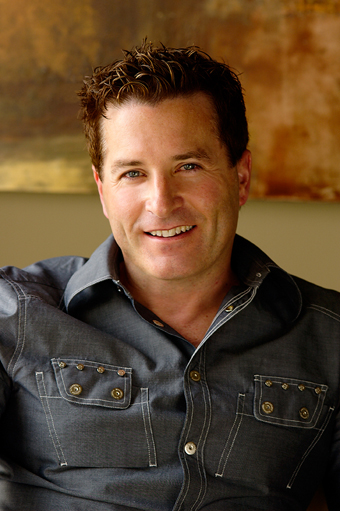
Canadian playboy Calvin Ayre went down to Costa Rica a decade ago and began taking illegal bets over the Internet.
Now he’s worth $1 billion (see cover story). Making a billion just isn’t what it used to be. In its inaugural ranking of the world’s richest people 20 years ago FORBES uncovered some 140 billionaires. Just three years ago we found 476. This year the list is a record 793, up 102 from last year. They’re worth a combined $2.6 trillion, up 18% since last March. Their average net worth: $3.3 billion.
Strong stock markets around the world (the U.S. being the notable exception) contributed to this surge in wealth. India, whose BSE SENSEX market was up 54% in the past 12 months, is home to 10 new billionaires, more than any other country besides the U.S.
Notable newcomers include Tulsi Tanti, a former textile trader whose alternative energy company owns Asia’s largest windfarm; Vijay Mallya, the liquor tycoon behind Kingfisher beer; Kushal Pal Singh, India’s biggest real estate developer; and Anurag Dikshit (pronounced “dix-sit”), another online gaming mogul, who made his fortune when he and two Americans took their PartyGaming poker company public in London last June.
Russia, whose RTS stock exchange was up 108%, benefited from strong gains in commodities prices. The surge swelled the fortunes of its 33 billionaires, including 7 newcomers who join the list. China now has 8 billionaires, four times as many as last year. The U.S. is home to 44 new billionaires and commands nearly half of the fortunes on the roster.
Bill Gates retains his title as the world’s richest person for the twelfth straight year, proving that while it’s getting easier to make a billion, the same can’t be said for making $50 billion.
Twelve people return to the list. Thirty-nine people depart from it. Seven fortunes were broken up among family members, usually siblings, adding 15 individuals to the ranks. Seventy-eight women make the list, 10 more than last year, though only 6 are self-made. Hind Hariri, daughter of slain Lebanese prime minister Rafik Hariri, who is eight months younger than Germany’s Prince Albert von Thurn und Taxis, is, at 22, the list’s youngest member.


